A Brief Introduction to Buckminster Fuller and His Techno-Optimistic Ideas

Buck­min­ster Fuller was, in many ways, a twen­ty-first cen­tu­ry man: an achieve­ment in itself, con­sid­er­ing he was born in the nine­teenth cen­tu­ry and died in the twen­ti­eth. In fact, it may actu­al­ly count as his defin­ing achieve­ment. For all the inven­tions pre­sent­ed as rev­o­lu­tion­ary that nev­er real­ly caught on — the Dymax­ion house and car, the geo­des­ic dome — as well as the count­less pages of eccen­tri­cal­ly the­o­ret­i­cal writ­ing and even more count­less hours of talk, it can be dif­fi­cult for us now, here in the actu­al twen­ty-first cen­tu­ry, to pin down the civ­i­liza­tion­al impact he so earnest­ly longed to make. But to the extent that he embod­ied the faith, born of the com­bi­na­tion of indus­tri­al might and exis­ten­tial dread that col­ored the post­war Amer­i­can zeit­geist, that tech­nol­o­gy can ratio­nal­ly re-shape the world, we’re all his intel­lec­tu­al chil­dren.

In the video above, Joe Scott pro­vides an intro­duc­tion to Fuller and his world in about ten min­utes. After a much-ref­er­enced Dam­a­scene con­ver­sion, the once-dis­solute Fuller spent most of his life “try­ing to solve the world’s prob­lems,” Scott says, “specif­i­cal­ly in find­ing ways to save resources and pro­vide for every­body on the plan­et: to do more with less, as we would say.”

The title he gave him­self of “com­pre­hen­sive antic­i­pa­to­ry design sci­en­tist” neat­ly rep­re­sents both his glob­al­ly, even uni­ver­sal­ly scaled ambi­tions, as well as his com­pul­sive knack for self-pro­mo­tion. If the designs he came up with to achieve his utopi­an ends nev­er took root in soci­ety (even geo­des­ic domes end­ed up as some­thing like “the hula hoop of twen­ti­eth-cen­tu­ry archi­tec­ture,” James Gle­ick writes, in that they were “every­where, and then they were a bit sil­ly”), the prob­lem had in part to do with the ten­den­cy of his grand visions to out­pace the func­tion­al tech­nol­o­gy of his day.

In his sen­si­bil­i­ty, too, “Bucky” Fuller can come off as a famil­iar type in our own time, even to those who’ve nev­er heard of him. “There is no doubt what­ev­er in Fuller’s mind that the whole devel­op­ment of mod­ern sci­ence and tech­nol­o­gy has result­ed from a will­ing­ness on the part of a very few men to sail into the wind of tra­di­tion, to trust in their own intel­lect, and to take advan­tage of their nat­ur­al mobil­i­ty,” wrote the New York­er’s Calvin Tomp­kins in a 1966 pro­file. No won­der he appealed to the Whole Earth Cat­a­log coun­ter­cul­ture of that decade, which even­tu­al­ly evolved into the cul­ture of what we now call Sil­i­con Val­ley, where no declared inten­tion to rein­vent the way humans live and work is too ridicu­lous­ly ambi­tious. Though few fig­ures could have seemed more like­ly to turn per­ma­nent­ly passé, Buck­min­ster Fuller con­tin­ues to inspire fas­ci­na­tion — and in a way, as a patron saint of tech­no-opti­mism, he lives on today.

Relat­ed con­tent:

A Three-Minute Intro­duc­tion to Buck­min­ster Fuller, One of the 20th Century’s Most Pro­duc­tive Design Vision­ar­ies

Buck­min­ster Fuller Tells the World “Every­thing He Knows” in a 42-Hour Lec­ture Series (1975)

Buck­min­ster Fuller, Isaac Asi­mov & Oth­er Futur­ists Make Pre­dic­tions About the 21st Cen­tu­ry in 1967: What They Got Right & Wrong

Buck­min­ster Fuller’s Dymax­ion Sleep Plan: He Slept Two Hours a Day for Two Years & Felt “Vig­or­ous” and “Alert”

The Life & Times of Buck­min­ster Fuller’s Geo­des­ic Dome: A Doc­u­men­tary

A New Online Archive Lets You Read the Whole Earth Cat­a­log and Oth­er Whole Earth Pub­li­ca­tions, Tak­ing You from 1970 to 2002

Based in Seoul, Col­in Marshall writes and broad­casts on cities, lan­guage, and cul­ture. He’s the author of the newslet­ter Books on Cities as well as the books 한국 요약 금지 (No Sum­ma­riz­ing Korea) and Kore­an Newtro. Fol­low him on the social net­work for­mer­ly known as Twit­ter at @colinmarshall.

Watch the First Episode of Sesame Street and 140 Other Free Episodes

?si=4AEj95O5wdpShG3I

FYI: Sesame Street has released on YouTube more than 140 full episodes from past sea­sons. On the Sesame Street Clas­sics chan­nel, you’ll find some icon­ic episodes, start­ing with the very first 1969 broad­cast. Watch it above. Also on that same chan­nel you can revis­it episodes where Big Bird reveals that Snuffy is real, Mr. Rogers vis­its the show, Maria and Luis get engaged, and the death of Mr. Hoop­er gets del­i­cate­ly addressed. Beyond these episodes, you can also watch 129 com­plete episodes on Sesame Street’s main YouTube Chan­nel here. Enjoy!

If you would like to sign up for Open Culture’s free email newslet­ter, please find it here. It’s a great way to see our new posts, all bun­dled in one email, each day.

If you would like to sup­port the mis­sion of Open Cul­ture, con­sid­er mak­ing a dona­tion to our site. It’s hard to rely 100% on ads, and your con­tri­bu­tions will help us con­tin­ue pro­vid­ing the best free cul­tur­al and edu­ca­tion­al mate­ri­als to learn­ers every­where. You can con­tribute through Pay­Pal, Patre­on, and Ven­mo (@openculture). Thanks!

Relat­ed Con­tent

When Mis­sis­sip­pi Tried to Ban Sesame Street for Show­ing a “High­ly Inte­grat­ed Cast” (1970)

Watch the Sesame Street Episode Banned for Being Too Scary, Fea­tur­ing The Wiz­ard of Oz’s Wicked Witch of the West (1976)

Watch Jazzy Spies: 1969 Psy­che­del­ic Sesame Street Ani­ma­tion, Fea­tur­ing Grace Slick, Teach­es Kids to Count

Philip Glass Com­pos­es Music for a Sesame Street Ani­ma­tion (1979)

Watch the Evolution of Paris Unfold in a Timelapse Video, from 300 BCE to 2025

Though it’s eas­i­ly for­got­ten in our age of air trav­el and instan­ta­neous glob­al com­mu­ni­ca­tion, many a great city is locat­ed where it is because of a riv­er. That holds true every­where from Lon­don to Buenos Aires to Tokyo to New York — and even to Los Ange­les, despite its own once-uncon­trol­lable riv­er hav­ing long since been turned into a much-ridiculed con­crete drainage chan­nel. But no urban water­way has been quite so roman­ti­cized for quite so long as the Seine, which runs through the mid­dle of Paris. And it was in the mid­dle of the Seine, on the now-apt­ly named Île de la Cité, that Paris began. In the 3D time-lapse video above, you can wit­ness the near­ly two-and-a-half-mil­len­ni­um evo­lu­tion of that tiny set­tle­ment into the cap­i­tal we know today in just three min­utes.

Paris did­n’t take its shape in a sim­ple process of out­ward growth. As is vis­i­ble from high above through the video’s ani­ma­tion, the city has grown dif­fer­ent­ly in each era of its exis­tence, whether it be that of the Parisii, the tribe from whom it takes its name; of the Roman Empire, which con­struct­ed the stan­dard Car­do Max­imus (now known as the Rue Saint-Jacques) and Decumanus Max­imus, among much oth­er infra­struc­ture; the Mid­dle Ages, amid whose great (and hap­haz­ard) den­si­fi­ca­tion rose Notre-Dame de Paris; or the time of Baron Hauss­mann, whose rad­i­cal urban ren­o­va­tions laid waste to great swathes of medieval Paris and replaced them with the broad avenues, state­ly res­i­den­tial build­ings, and grand mon­u­ments rec­og­nized around the world today.

At first glance, the built envi­ron­ment of mod­ern Paris can seem to have been frozen in Hauss­man­n’s mid-nine­teenth cen­tu­ry — and no doubt, that’s just the way its count­less many tourists might want it. But as shown in the video, the Ville Lumière has kept chang­ing through­out the indus­tri­al era, and has­n’t stopped in the suc­ceed­ing “glob­al­iza­tion era.” More growth and trans­for­ma­tion has late­ly tak­en place out­side cen­tral Paris, beyond the encir­cling Boule­vard Périphérique, but it would hard­ly do jus­tice to his­to­ry to ignore such more rel­a­tive­ly recent, more divi­sive addi­tions as the Tour Mont­par­nasse, the Cen­tre Pom­pi­dou, or the Lou­vre Pyra­mid. (When it was built in the eigh­teen-eight­ies, even the beloved Eif­fel Tow­er drew a great deal of ire and dis­dain.) And though the ven­er­a­ble Notre-Dame may have stood on Île de la Cité since the four­teenth cen­tu­ry, the thor­ough­go­ing recon­struc­tion that fol­lowed its 2019 fire has made it belong just as much to the twen­ty-first. 

via Kot­tke

Relat­ed con­tent:

A 3D Ani­mat­ed His­to­ry of Paris: Take a Visu­al Jour­ney from Ancient Times to 1900

How Paris Became Paris: The Sto­ry Behind Its Icon­ic Squares, Bridges, Mon­u­ments & Boule­vards

A 3D Ani­ma­tion Reveals What Paris Looked Like When It Was a Roman Town

Take an Aer­i­al Tour of Medieval Paris

The Archi­tec­tur­al His­to­ry of the Lou­vre: 800 Years in Three Min­utes

An Ani­mat­ed His­to­ry of Ver­sailles: Six Min­utes of Ani­ma­tion Show the Con­struc­tion of the Grand Palace Over 400 Years

Based in Seoul, Col­in Marshall writes and broad­casts on cities, lan­guage, and cul­ture. He’s the author of the newslet­ter Books on Cities as well as the books 한국 요약 금지 (No Sum­ma­riz­ing Korea) and Kore­an Newtro. Fol­low him on the social net­work for­mer­ly known as Twit­ter at @colinmarshall.

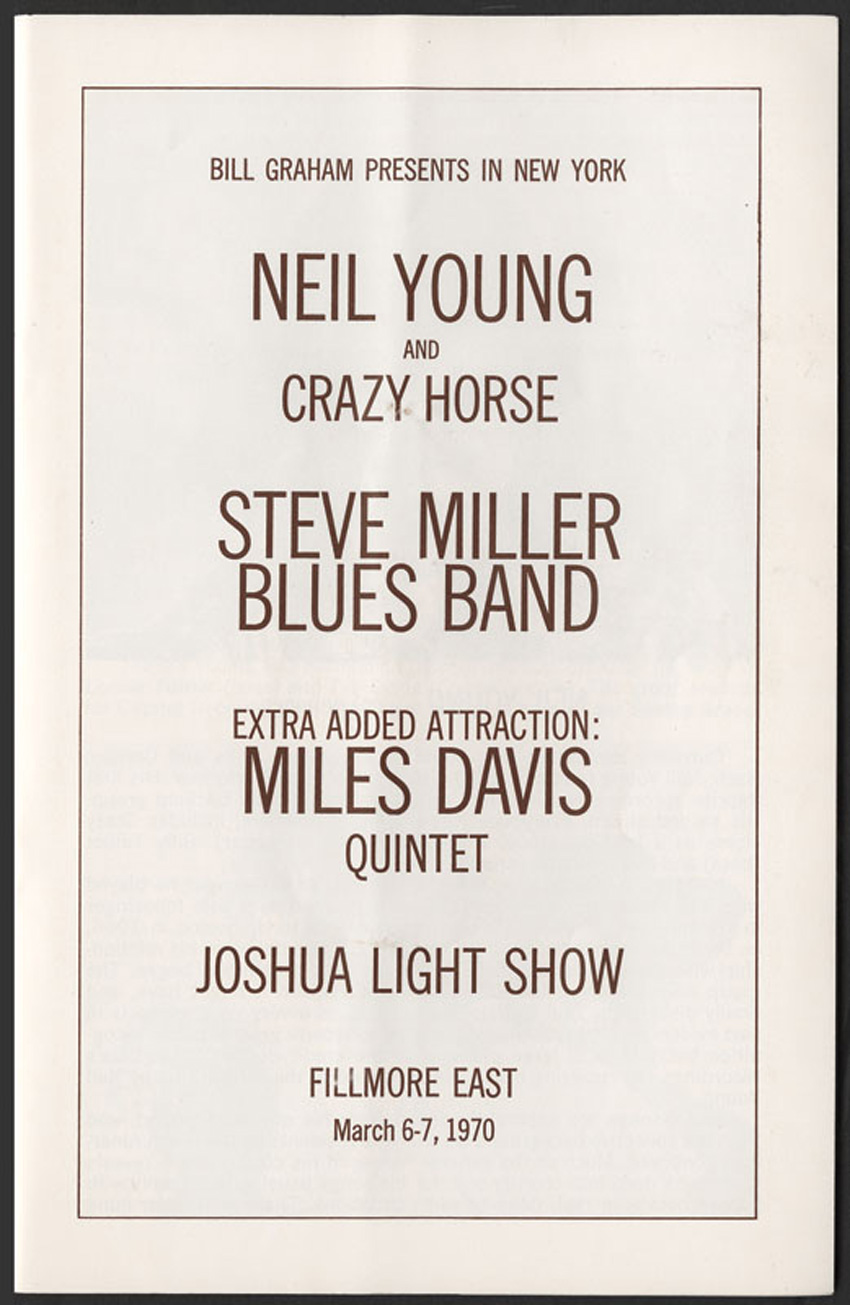
Miles Davis Opens for Neil Young and “That Sorry-Ass Cat” Steve Miller at The Fillmore East (1970)

miles fillmore east

The sto­ry, the many sto­ries, of Miles Davis as an open­ing act for sev­er­al rock bands in the 1970s makes for fas­ci­nat­ing read­ing. Before he blew the Grate­ful Dead’s minds as their open­ing act at the Fill­more West in April 1970 (hear both bands’ sets here), Davis and his all-star Quintet—billed as an “Extra Added Attraction”—did a cou­ple nights at the Fill­more East, open­ing for Neil Young and Crazy Horse and The Steve Miller Band in March of 1970. The com­bi­na­tion of Young and Davis actu­al­ly seems to have been rather unre­mark­able, but there is a lot to say about where the two artists were indi­vid­u­al­ly.

Nate Chi­nen in At Length describes their meet­ing as a “min­i­mum orbit inter­sec­tion distance”—the “clos­est point of con­tact between the paths of two orbit­ing sys­tems.” Both artists were “in the thrall of rein­ven­tion,” Young mov­ing away from the smooth­ness of CSNY and into free-form anti-vir­tu­os­i­ty with Crazy Horse; Davis toward vir­tu­os­i­ty turned back into the blues.

Miles, sug­gest­ed jazz writer Greg Tate, was “bored fid­dling with quan­tum mechan­ics and just want­ed to play the blues again.” The sto­ry of Davis and Young at the Fill­more East is best told by lis­ten­ing to the music both were mak­ing at the time. Hear “Cin­na­mon Girl” below and the rest of Neil Young and Crazy Horse’s incred­i­ble set here. The band had just released their beau­ti­ful­ly ragged Every­body Knows this is Nowhere.

When it comes to the meet­ing of Davis and Steve Miller, the sto­ry gets juici­er, and much more Miles: the dif­fi­cult per­former, not the impos­si­bly cool musi­cian. (It some­times seems like the word “dif­fi­cult” was invent­ed to describe Miles Davis.) The trum­peter’s well-earned ego­tism lends his lega­cy a kind of rak­ish charm, but I don’t rel­ish the posi­tions of those record com­pa­ny exec­u­tives and pro­mot­ers who had to wran­gle him, though many of them were less than charm­ing indi­vid­u­als them­selves. Colum­bia Records’ Clive Davis, who does not have a rep­u­ta­tion as a pushover, sounds alarmed in his rec­ol­lec­tion of Miles’ reac­tion after he forced the trum­peter to play the Fill­more dates to mar­ket psy­che­del­ic jazz-funk mas­ter­piece Bitch­es Brew to white audi­ences.

Accord­ing to John Glatt, Davis remem­bers that Miles “went nuts. He told me he had no inter­est in play­ing for ‘those fu*king long-haired kids.’” Par­tic­u­lar­ly offend­ed by The Steve Miller Band, Davis refused to arrive on time to open for an artist he deemed “a sor­ry-ass cat,” forc­ing Miller to go on before him. “Steve Miller didn’t have his shit going for him,” remem­bers Davis in his exple­tive-filled auto­bi­og­ra­phy, “so I’m pissed because I got to open for this non-play­ing motherfu*ker just because he had one or two sor­ry-ass records out. So I would come late and he would have to go on first and then when we got there, we smoked the motherfu*king place, and every­body dug it.” There is no doubt Davis and Quin­tet smoked. Hear them do “Direc­tions” above from an Ear­ly Show on March 6, 1970.

“Direc­tions,” from unre­leased tapes, is as raw as they come, “the inten­si­ty,” writes music blog Willard’s Worm­holes, “of a band that sounds like they were play­ing at The Fill­more to prove some­thing to some­body… and did.” The next night’s per­for­mances were released in 2001 as It’s About That Time. Hear the title track above from March 7th. You can also stream more on YouTube. As for The Steve Miller Blues Band? We have audio of their per­for­mance from that night as well. Hear it below. It’s inher­ent­ly an unfair com­par­i­son between the two bands, not least because of the vast dif­fer­ence in audio qual­i­ty. But as for whether or not they sound like “sor­ry-ass cats”… well, you decide.

Note: An ear­li­er ver­sion of this post appeared on our site in 2015.

Relat­ed Con­tent:

The Night When Miles Davis Opened for the Grate­ful Dead in 1970: Hear the Com­plete Record­ings

In 1969 Telegram, Jimi Hen­drix Invites Paul McCart­ney to Join a Super Group with Miles Davis

Miles Davis Plays Music from Kind of Blue Live in 1959, Intro­duc­ing a Com­plete­ly New Style of Jazz

Jer­ry Gar­cia Talks About the Birth of the Grate­ful Dead & Play­ing Kesey’s Acid Tests in New Ani­mat­ed Video

Josh Jones is a writer and musi­cian based in Durham, NC. 

How the “Netflix Movie” Turns Cinema into “Visual Muzak”

When Net­flix launched around the turn of the mil­len­ni­um, it was received as a god­send by many Amer­i­can cinephiles, espe­cial­ly those who lived nowhere near diverse­ly pro­grammed revival hous­es or well-curat­ed video stores. A quar­ter-cen­tu­ry lat­er, it’s safe to say that those days have come to an end. Not only does the stream­ing-only Net­flix of the twen­ty-twen­ties no longer trans­mit movies on DVD through the mail (a ser­vice its younger users have trou­ble even imag­in­ing), it ranks approx­i­mate­ly nowhere as a pre­ferred cinephile des­ti­na­tion. That has to do with a selec­tion much dimin­ished since the DVD days — espe­cial­ly as regards movies more than a decade or so old — but also with a brand debased by too many bland, for­mu­la­ic orig­i­nal pro­duc­tions.

Unlike the plat­for­m’s var­i­ous acclaimed mul­ti-episode dra­mat­ic series, the “Net­flix movie” com­mands no crit­i­cal respect. But it can, at least if you trust the com­pa­ny’s own view­er­ship data, com­mand a large audi­ence, if not an espe­cial­ly atten­tive one. The gen­er­al semi-engage­ment of Net­flix view­ers, as argued in the Nerd­stal­gic video at the top of the post, is reflect­ed in the qual­i­ty of the “movie-shaped prod­uct” now served to them.

Far from the slapped-togeth­er approx­i­ma­tions of Hol­ly­wood we once expect­ed from films made for TV, the stream-chart-top­ping likes of Red Notice and The Elec­tric State are mega-bud­get­ed pro­duc­tions brim­ming with big stars and large-scale visu­al effects. They’re also tis­sues of algo­rithm-approved nar­ra­tive ele­ments, bor­rowed imagery, and third-hand quips, all of them for­got­ten as soon as the next piece of con­tent begins auto-play­ing.

On the lat­est Joe Rogan Expe­ri­ence pod­cast, Ben Affleck and Matt Damon turned up to pro­mote their own Net­flix movie, The Rip. They don’t take long to open up about the dis­tinc­tive chal­lenges of work­ing for that plat­form in this era. Damon men­tions that, where­as action movies once saved their explo­sion-inten­sive set pieces for after the sto­ry gets in motion, Net­flix asks, “Can we get a big one in the first five min­utes? We want peo­ple to stay tuned in. And it wouldn’t be ter­ri­ble if you reit­er­at­ed the plot three or four times in the dia­logue because peo­ple are on their phones while they’re watch­ing.” Accord­ing to the film­mak­ers who speak about it, the needs of these so-called “sec­ond screen” view­ers have assumed great impor­tance in the stu­dio notes offered by Net­flix — which has, at this point, become a major stu­dio in itself.

Sat­is­fy­ing the appar­ent demands of Net­flix’s met­rics results in what Nerd­stal­gic calls “visu­al muzak,” geared to hold out just enough famil­iar­i­ty and pres­tige to get users to press play, with­out ever call­ing so much atten­tion to itself that they press stop. This makes the stu­dio pic­tures of the nineties, when Affleck and Damon broke out, look like the stuff of a gold­en age. “There were a lot of real­ly good inde­pen­dent movies that were being made,” Damon remem­bers. “They were mak­ing dar­ing movies, and every­one just got way more con­ser­v­a­tive.” On one lev­el, stream­ing plat­forms have great­ly widened access to film in gen­er­al; on anoth­er, they’ve sti­fled artis­tic indi­vid­u­al­i­ty and risk-tak­ing on the part of actu­al films. As Quentin Taran­ti­no has point­ed out, tech­nol­o­gy and eco­nom­ics put main­stream cin­e­ma into peri­ods of cre­ative retrench­ment every so often: the fifties, for exam­ple, or the eight­ies. Whether anoth­er sev­en­ties or nineties lies ahead, today’s cinephiles can only hope.

Relat­ed Con­tent:

Who Is Killing Cin­e­ma?: A Mur­der Mys­tery Iden­ti­fies the Cul­tur­al & Eco­nom­ic Cul­prits

Why Movies Don’t Feel Like Movies Any­more: The Rise of Meta­mod­ernist Films, and How They Grew Out of Mod­ernism & Post­mod­ernism

How the “Mar­veliza­tion” of Cin­e­ma Accel­er­ates the Decline of Film­mak­ing

The Decay of Cin­e­ma: Susan Son­tag, Mar­tin Scors­ese & Their Lamen­ta­tions on the Decline of Cin­e­ma Explored in a New Video Essay

Why We All Need Sub­ti­tles Now

Based in Seoul, Col­in Marshall writes and broad­casts on cities, lan­guage, and cul­ture. He’s the author of the newslet­ter Books on Cities as well as the books 한국 요약 금지 (No Sum­ma­riz­ing Korea) and Kore­an Newtro. Fol­low him on the social net­work for­mer­ly known as Twit­ter at @colinmarshall.

What Happens When Mortals Try to Drink Winston Churchill’s Daily Intake of Alcohol

I have tak­en more out of alco­hol than alco­hol has tak­en out of me. — Win­ston Churchill

Win­ston Churchill had a rep­u­ta­tion as a bril­liant states­man and a prodi­gious drinker.

The for­mer prime min­is­ter imbibed through­out the day, every day.  He also burned through 10 dai­ly cig­ars, and lived to the ripe old age of 90.

His come­back to Field Mar­shal Bernard Mont­gomery’s boast that he nei­ther smoked nor drank, and was 100 per­cent fit was “I drink and smoke, and I am 200 per­cent fit.”

First Lady Eleanor Roo­sevelt mar­veled “that any­one could smoke so much and drink so much and keep per­fect­ly well.”

In No More Cham­pagne: Churchill and His Mon­ey, author David Lough doc­u­ments Churchill’s dis­as­trous alco­hol expens­es, as well as the bot­tle count at Chartwell, his Ken­tish res­i­dence. Here’s the tal­ly for March 24,1937:

180 bot­tles and 30 half bot­tles of Pol Roger cham­pagne

20 bot­tles and 9 half bot­tles of oth­er cham­pagne

100+ bot­tles of claret

117 bot­tles and 389 half bot­tles of Barsac

13 bot­tles of brandy

5 bot­tles of cham­pagne brandy

7 bot­tles of liqueur whisky


All that liquor was not going to drink itself.

Did Churchill have a hol­low leg?  An extra­or­di­nar­i­ly high tol­er­ance? An uncan­ny abil­i­ty to mask his intox­i­ca­tion?

Whiskey som­me­li­er Rex Williams, a founder of the Whiskey Tribe YouTube chan­nel, and pod­cast host Andrew Heaton endeav­or to find out, above, by ded­i­cat­ing a day to the British Bulldog’s drink­ing reg­i­men.

They’re not the first to under­take such a fol­ly.

The Dai­ly Telegraph’s Har­ry Wal­lop doc­u­ment­ed a sim­i­lar adven­ture in 2015, wind­ing up queasy, and to judge by his 200 spelling mis­takes, cog­ni­tive­ly impaired.

Williams and Heaton’s on-cam­era exper­i­ment achieves a Drunk His­to­ry vibe and tell­tale flushed cheeks.

Here’s the drill, not that we advise try­ing it at home:

BREAKFAST

An eye open­er of John­nie Walk­er Red — just a splash — mixed with soda water to the rim.

Fol­low with more of the same through­out the morn­ing.

This is how Churchill, who often con­duct­ed his morn­ing busi­ness abed in a dress­ing gown, man­aged to aver­age between 1 — 3 ounces of alco­hol before lunch.

Appar­ent­ly he devel­oped a taste for it as a young sol­dier post­ed in what is now Pak­istan, when Scotch not only improved the fla­vor of plain water, ‘once one got the knack of it, the very repul­sion from the fla­vor devel­oped an attrac­tion of its own.”

After a morn­ing spent sip­ping the stuff, Heaton reports feel­ing “play­ful and jokey, but not yet vio­lent.”

LUNCH

Time for “an ambi­tious quo­ta of cham­pagne!”

Churchill’s pre­ferred brand was Pol Roger, though he wasn’t averse to Giesler, Moet et Chan­don, or Pom­mery,  pur­chased from the upscale wine and spir­its mer­chant Ran­dolph Payne & Sons,  whose let­ter­head iden­ti­fied them as sup­pli­ers to “Her Majesty The Late Queen Vic­to­ria and to The Late King William The Fourth.”

Churchill enjoyed his impe­r­i­al pint of cham­pagne from a sil­ver tankard, like a “prop­er Edwar­dian gent” accord­ing to his life­long friend, Odette Pol-Roger.

Williams and Heaton take theirs in flutes accom­pa­nied by fish sticks from the freez­er case. This is the point beyond which a hang­over is all but assured.

Lunch con­cludes with a post-pran­di­al cognac, to set­tle the stom­ach and begin the diges­tion process.

Churchill, who declared him­self a man of sim­ple tastes — I am eas­i­ly sat­is­fied with the best — would have insist­ed on some­thing from the house of Hine.

RESTORATIVE  AFTERNOON NAP

This seems to be a crit­i­cal ele­ment of Churchill’s alco­hol man­age­ment suc­cess. He fre­quent­ly allowed him­self as much as 90 min­utes to clear the cob­webs.

A nap def­i­nite­ly pulls our re-enac­tors out of their tail spins. Heaton emerges ready to “bluff (his) way through a meet­ing.”

TEATIME

I guess we can call it that, giv­en the tim­ing.

No tea though.

Just a steady stream of extreme­ly weak scotch and sodas to take the edge off of admin­is­tra­tive tasks.

DINNER

More cham­pagne!!! More cognac!!!

“This should be the apex of our wit,” a bleary Heaton tells his belch­ing com­pan­ion, who fess­es up to vom­it­ing upon wak­ing the next day.

Their con­clu­sion? Churchill’s reg­i­men is unmanageable…at least for them.

And pos­si­bly also for Churchill.

As fel­low Scotch enthu­si­ast Christo­pher Hitchens revealed in a 2002 arti­cle in The Atlantic, some of Churchill’s most famous radio broad­casts, includ­ing his famous pledge to “fight on the beach­es” after the Mir­a­cle of Dunkirk, were voiced by a pinch hit­ter:

Nor­man Shel­ley, who played Win­nie-the-Pooh for the BBC’s Children’s Hour, ven­tril­o­quized Churchill for his­to­ry and fooled mil­lions of lis­ten­ers. Per­haps Churchill was too much inca­pac­i­tat­ed by drink to deliv­er the speech­es him­self.

Or per­haps the great man mere­ly felt he’d earned the right to unwind with a glass of Graham’s Vin­tage Char­ac­ter Port, a Fine Old Amon­til­la­do Sher­ry or a Fine Old Liquor brandy, as was his wont.

Note: An ear­li­er ver­sion of this post appeared on our site in 2022.

Relat­ed Con­tent 

Win­ston Churchill Gets a Doctor’s Note to Drink Unlim­it­ed Alco­hol While Vis­it­ing the U.S. Dur­ing Pro­hi­bi­tion (1932)

Win­ston Churchill’s Paint­ings: Great States­man, Sur­pris­ing­ly Good Artist

Oh My God! Win­ston Churchill Received the First Ever Let­ter Con­tain­ing “O.M.G.” (1917)

Win­ston Churchill Goes Back­ward Down a Water Slide & Los­es His Trunks (1934)

- Ayun Hal­l­i­day is the Chief Pri­ma­tol­o­gist in NYC.

by | Permalink | Make a Comment ( 2 ) |

MTV Rewind Lets You Revisit 40,000 Music Videos & Commercials from the Golden Age of MTV

MTV still exists. At least, it still exists in the Unit­ed States, or in cer­tain of that coun­try’s mar­kets, for the time being. A flur­ry of pre­ma­ture obit­u­ar­ies recent­ly blew through the inter­net after the announce­ment that the net­work had shut down in oth­er parts of the world, Europe includ­ed. But even there, some expressed the sen­ti­ment that MTV had already died long before. And indeed, in the U.S., where it orig­i­nal­ly launched, ask­ing who remem­bers when MTV actu­al­ly used to play music videos has been a com­mon lament for decades, aired even by gen­er­a­tions too young to remem­ber those days them­selves. But mem­bers of any gen­er­a­tion can now relive them — or live them for the first time — through a new site called MTV Rewind.

The first music video that greets the vis­i­tor is The Bug­gles’ “Video Killed the Radio Star,” and appro­pri­ate­ly so, since it inau­gu­rat­ed MTV itself when it went live on August 1st, 1981. What fol­lows are all the rest of the videos played on that first day, like Phil Collins’ “In the Air Tonight,” Blondie’s “Rap­ture,” David Bowie’s “Boys Keep Swing­ing,” and Kate Bush’s “Wuther­ing Heights.”

(Oth­er, less wide­ly remem­bered entries include no few­er than three songs by Cliff Richard, which speaks to the then-incom­plete for­ma­tion of the kind of pop-musi­cal cul­ture we still asso­ciate with MTV.) The site’s oth­er playlists recre­ate oth­er eras and genre-spe­cif­ic pro­grams, from 120 Min­utes to Total Request LiveHead­banger’s Ball to Yo! MTV Raps.

Cur­rent­ly, MTV Rewind’s music video count comes to about 40,000, enough to ensure any for­mer addict of the net­work a stream of nos­tal­gia hits. But the site’s cre­ator (a 43-year-old Amer­i­can res­i­dent in Alba­nia, accord­ing to the New York Times, known pseu­do­ny­mous­ly as “Flex”) has also incor­po­rat­ed vin­tage sta­tion IDs and com­mer­cials, many of them liable to trig­ger down­right Prous­t­ian sen­sa­tions in the right view­er. What may feel refresh­ing even to curi­ous younger vis­i­tors is that, whichev­er chan­nel they choose, the next video that plays is deter­mined not by an algo­rithm attempt­ing to pre­dict their per­son­al tastes. Rather, each playlist is shaped by the pop­u­lar cul­ture of a par­tic­u­lar era, with enough left-field selec­tions to keep it inter­est­ing: just the sort of thing in hopes of which we used to flip over to MTV, back when the idea of stream­ing video on our com­put­ers still sound­ed like sheer­est fan­ta­sy. Enter MTV Rewind here.

Relat­ed Con­tent:

Watch the First 2+ Hours of MTV’s Inau­gur­al Broad­cast (August 1, 1981)

All the Music Played on MTV’s 120 Min­utes: A 2,500-Video Youtube Playlist

The Com­plete Col­lec­tion Of MTV’s Head­bangers Ball: Watch 1,215 Videos from the Hey­day of Met­al Videos

The Inter­net Archive Res­cues MTV News’ Web Site, Mak­ing 460,000+ of Its Pages Search­able Again

The 50 Great­est Music Videos of All Time, Ranked by AV Club

Revis­it Pop-Up Video: The VH1 Series That Rein­vent­ed Music Videos & Pop Cul­ture

Based in Seoul, Col­in Marshall writes and broad­casts on cities, lan­guage, and cul­ture. He’s the author of the newslet­ter Books on Cities as well as the books 한국 요약 금지 (No Sum­ma­riz­ing Korea) and Kore­an Newtro. Fol­low him on the social net­work for­mer­ly known as Twit­ter at @colinmarshall.

Discover Michelangelo’s First Painting, Created When He Was Only 12 or 13 Years Old

Think back, if you will, to the works of art you cre­at­ed at age twelve or thir­teen. For many, per­haps most of us, our out­put at that stage of ado­les­cence amount­ed to direc­tion­less doo­dles, chaot­ic comics, and a few unsteady-at-best school projects. But then, most of us did­n’t grow up to be Michelan­ge­lo. In the late four­teen-eight­ies, when that tow­er­ing Renais­sance artist was still what we would now call a “tween,” he paint­ed The Tor­ment of Saint Antho­ny, a depic­tion of the tit­u­lar reli­gious fig­ure beset by demons in the desert. Though based on a wide­ly known engrav­ing, it nev­er­the­less shows evi­dence of rapid­ly advanc­ing tech­nique, inspi­ra­tion, and even cre­ativ­i­ty — espe­cial­ly when placed under the infrared scan­ner.

For about half a mil­len­ni­um, The Tor­ment of Saint Antho­ny was­n’t thought to have been paint­ed by Michelan­ge­lo. As explained in the video from Inspi­rag­gio just below, when the paint­ing sold at Sothe­by’s in 2008, the buy­er took it to the Met­ro­pol­i­tan Muse­um of Art for exam­i­na­tion and clean­ing.

“Beneath the lay­ers of dirt accu­mu­lat­ed over the cen­turies,” says the nar­ra­tor, “a very par­tic­u­lar col­or palette appeared. “The tones, the blends, the way the human fig­ure was treat­ed: all of it began to resem­ble the style Michelan­ge­lo would use years lat­er in none oth­er than the Sis­tine Chapel.” Infrared reflec­tog­ra­phy sub­se­quent­ly turned up pen­ti­men­ti, or cor­rec­tion marks, a com­mon indi­ca­tion that “a paint­ing is not a copy, but an orig­i­nal work cre­at­ed with artis­tic free­dom.”

It was the Kim­bell Art Muse­um in Fort Worth, Texas that first bet big on the prove­nance of The Tor­ment of Saint Antho­ny. Its new­ly hired direc­tor pur­chased the paint­ing after turn­ing up “not a sin­gle con­vinc­ing argu­ment against the attri­bu­tion.” Thus acquired, it became “the only paint­ing by Michelan­ge­lo locat­ed any­where in the Amer­i­c­as, and also just one of four easel paint­ings attrib­uted to him through­out his entire career,” dur­ing most of which he dis­par­aged oil paint­ing itself. About a decade lat­er, and after fur­ther analy­sis, the art his­to­ri­an Gior­gio Bon­san­ti put his con­sid­er­able author­i­ty behind a defin­i­tive con­fir­ma­tion that it is indeed the work of the young Michelan­ge­lo. There remain doubters, of course, and even the noto­ri­ous­ly uncom­pro­mis­ing artist him­self may have con­sid­ered it an imma­ture work unwor­thy of his name. But who else could have cre­at­ed an imma­ture work like it?

Relat­ed Con­tent:

Orig­i­nal Por­trait of the Mona Lisa Found Beneath the Paint Lay­ers of Leonar­do da Vinci’s Mas­ter­piece

When Michelan­ge­lo Cre­at­ed Artis­tic Designs for Mil­i­tary For­ti­fi­ca­tions to Pro­tect Flo­rence (1529–1530)

How Four Mas­ters — Michelan­ge­lo, Donatel­lo, Ver­roc­chio & Berni­ni — Sculpt­ed David

A Secret Room with Draw­ings Attrib­uted to Michelan­ge­lo Opens to Vis­i­tors in Flo­rence

Michelan­ge­lo Entered a Com­pe­ti­tion to Put a Miss­ing Arm Back on Lao­coön and His Sons — and Lost

Michelangelo’s Illus­trat­ed Gro­cery List

Based in Seoul, Col­in Marshall writes and broad­casts on cities, lan­guage, and cul­ture. He’s the author of the newslet­ter Books on Cities as well as the books 한국 요약 금지 (No Sum­ma­riz­ing Korea) and Kore­an Newtro. Fol­low him on the social net­work for­mer­ly known as Twit­ter at @colinmarshall.

Download 435 High Resolution Images from John J. Audubon’s The Birds of America

In our expe­ri­ence, bird lovers fall into two gen­er­al cat­e­gories:

Keen­ly obser­vant cat­a­loguers like John James Audubon …

And those of us who can­not resist assign­ing anthro­po­mor­phic per­son­al­i­ties and behav­iors to the 435 stars of Audubon’s The Birds of Amer­i­ca, a stun­ning col­lec­tion of prints from life-size water­col­ors he pro­duced between 1827 and 1838.

Our sus­pi­cions have lit­tle to do with biol­o­gy, but rather, a cer­tain zesti­ness of expres­sion, an overem­phat­ic beak, a droll gleam in the eye.

The Audubon Society’s new­ly redesigned web­site abounds with trea­sure for those in either camp:

Free high res down­loads of all 435 plates.

Mp3s of each specimen’s call.

And vin­tage com­men­tary that effec­tive­ly splits the dif­fer­ence between sci­ence and the unin­ten­tion­al­ly humor­ous locu­tions of anoth­er age.

Take for instance, the Bur­row­ing Owl, as described by self-taught nat­u­ral­ist Thomas Say (1787–1834):

It is delight­ful, dur­ing fine weath­er, to see these live­ly lit­tle crea­tures sport­ing about the entrance of their bur­rows, which are always kept in the neat­est repair, and are often inhab­it­ed by sev­er­al indi­vid­u­als. When alarmed, they imme­di­ate­ly take refuge in their sub­ter­ranean cham­bers; or, if the dread­ed dan­ger be not imme­di­ate­ly impend­ing, they stand near the brink of the entrance, brave­ly bark­ing and flour­ish­ing their tails, or else sit erect to recon­noitre the move­ments of the ene­my.

The notes of ornithol­o­gist John Kirk Townsend (1809 – 1851) sug­gest that not every­one was as tak­en with the species as Say (who was, in all fair­ness, the father of Amer­i­can ento­mol­o­gy):

Noth­ing can be more unpleas­ant than the bag­ging of this species, on account of the fleas with which their plumage swarms, and which in all prob­a­bil­i­ty have been left in the bur­row by the Bad­ger or Mar­mot, at the time it was aban­doned by these ani­mals. I know of no oth­er bird infest­ed by that kind of ver­min. 

The Com­mon Gallinule, above, sug­gests that there’s often more to these birds than meets the eye. His some­what sheep­ish look­ing coun­te­nance belies the red hot love life Audubon recounts:

… the man­i­fes­ta­tions of their ama­to­ry propen­si­ty were quite remark­able. The male birds court­ed the females, both on the land and on the water; they fre­quent­ly spread out their tail like a fan, and moved round each oth­er, emit­ting a mur­mur­ing sound for some sec­onds. The female would after­wards walk to the water’s edge, stand in the water up to her breast, and receive the caress­es of the male, who imme­di­ate­ly after would strut on the water before her, jerk­ing with rapid­i­ty his spread tail for awhile, after which they would both resume their ordi­nary occu­pa­tions.

Being that we are firm­ly plant­ed in the sec­ond type of bird lover’s camp, this ornitho­log­i­cal cor­nu­copia main­ly serves to whet our appetite for more Falseknees, self-described bird nerd Joshua Barkman’s beau­ti­ful­ly ren­dered web­com­ic.

Yes, Audubon’s Indi­go Birdaka Petit Pape­bleu, “an active and live­ly lit­tle fel­low” who “pos­sess­es much ele­gance in his shape, and also a cer­tain degree of firm­ness in his make” was sep­a­rat­ed by a cen­tu­ry or so from “Mood Indi­go”—we pre­sume that’s the tune stuck in Barkman’s bird’s head—but he does look rather pre­oc­cu­pied, no?

Pos­si­bly just think­ing of meal­worms…

Explore Audubon’s Birds of Amer­i­ca by chrono­log­i­cal or alpha­bet­i­cal order, or by state, and down­load them all for free here.

Note: An ear­li­er ver­sion of this post appeared on our site in 2019.

Relat­ed Con­tent:

Cor­nell Launch­es Archive of 150,000 Bird Calls and Ani­mal Sounds, with Record­ings Going Back to 1929

A Lav­ish­ly Illus­trat­ed Cat­a­log of All Hum­ming­bird Species Known in the 19th Cen­tu­ry Gets Restored & Put Online

What Kind of Bird Is That?: A Free App From Cor­nell Will Give You the Answer

Explore an Inter­ac­tive Ver­sion of The Wall of Birds, a 2,500 Square-Foot Mur­al That Doc­u­ments the Evo­lu­tion of Birds Over 375 Mil­lion Years

The Bird Library: A Library Built Espe­cial­ly for Our Fine Feath­ered Friends

Ayun Hal­l­i­day is an author, illus­tra­tor, and the­ater mak­er in NYC.

When Pianist Maria João Pires Prepared to Perform the Wrong Mozart Concerto, Then Recovered Miraculously

Imag­ine, if you will, tak­ing a seat at the piano before a full house of 2,000 music lovers ready to hear Mozart’s Piano Con­cer­to No. 20 in D minor — and, more impor­tant­ly, on stage with an orches­tra and con­duc­tor more than ready to play it. That would be dif­fi­cult enough, but now imag­ine that you thought you were sup­posed to play the Piano Con­cer­to No.23 in A major, anoth­er piece of music entire­ly. This is the stuff of night­mares, and indeed, the very sit­u­a­tion in which pianist Maria João Pires found her­self in 2013, after she’d been recruit­ed to fill in for anoth­er play­er at an open rehearsal held at Ams­ter­dam’s Con­cert­ge­bouw. You can watch it unfold, assum­ing you can bear it, in the clip above.

As Pires says in the Clas­sic FM inter­view below, it had been “per­haps 11 months” since she’d last played the piece into which she could hear the orches­tra launch­ing, “and that’s the moment where you start los­ing the mem­o­ry of the details. That’s how the mem­o­ry func­tions, you know. And when peo­ple see this pan­ic, they per­haps don’t know that the real­i­ty is, we lose our mem­o­ries after just a cou­ple of months.”

It seems to have been the encour­age­ment of con­duc­tor Ric­car­do Chail­ly that got her through the moment of pan­ic and into a cred­itable per­for­mance. “You know it so well!” he insist­ed to her, and indeed, as he remem­bered lat­er, “The mir­a­cle is that she has such a mem­o­ry that she could, with­in a minute, switch to a new con­cer­to with­out mak­ing one mis­take.”

The eleventh-hour call Pires received ask­ing her to take the gig was part of the prob­lem, but so was a mis­heard num­ber. Accord­ing to the Köchel cat­a­logue, which orga­nizes all of Mozart’s work, the Piano Con­cer­to No. 20 in D minor is 466, where­as the Piano Con­cer­to No. 23 in A major is 488. Whether Pires mis­heard the K‑number or the caller mis­spoke, she soon found her­self faced with a musi­cal chal­lenge for which she felt com­plete­ly unpre­pared. In fact, she was­n’t: as Chail­ly knew, or at least banked on, her career as a clas­si­cal pianist up to that point had giv­en her all the expe­ri­ence she need­ed to draw upon to over­come the cri­sis. As her recov­ery reminds us, pro­fes­sion­al­ism isn’t so much about mak­ing sure that things always go right as being able to han­dle it when they go wrong. It hap­pens that Pires has gone through this par­tic­u­lar kind of mix-up three times, which makes her a con­sum­mate pro­fes­sion­al indeed.

via MyMod­ern­Met

Relat­ed Con­tent:

How Kei­th Jar­rett Played on a Bro­ken Piano & Turned a Poten­tial­ly Dis­as­trous Con­cert Into the Best-Sell­ing Piano Album of All Time (1975)

Watch the First Per­for­mance of a Mozart Com­po­si­tion That Had Been Lost for Cen­turies

Hear the Exper­i­men­tal Piano Jazz Album by Come­di­an H. Jon Ben­jamin — Who Can’t Play Piano

The Piano Played with 16 Increas­ing Lev­els of Com­plex­i­ty: From Easy to Very Com­plex

The Mis­take Waltz: Watch the Hilar­i­ous Bal­let by Leg­endary Chore­o­g­ra­ph­er Jerome Rob­bins

Based in Seoul, Col­in Marshall writes and broad­casts on cities, lan­guage, and cul­ture. He’s the author of the newslet­ter Books on Cities as well as the books 한국 요약 금지 (No Sum­ma­riz­ing Korea) and Kore­an Newtro. Fol­low him on the social net­work for­mer­ly known as Twit­ter at @colinmarshall.

“Riders on the Storm” Performed by John Densmore, Robby Krieger and 20+ Musicians Around the World

Formed in 1965, the Doors burned hot until Jim Mor­ri­son died in 1971, and the band final­ly broke up in 1973. The group left behind more than a few fine songs—“Light My Fire,” “Break On Through (To the Oth­er Side),” “L.A. Woman,” and “Road­house Blues,” to name a few. Above, the music col­lec­tive Play­ing for Change pays trib­ute to anoth­er Doors clas­sic, “Rid­ers on the Storm.” Fea­tur­ing per­for­mances by the two sur­viv­ing Doors mem­bers John Dens­more and Rob­by Krieger, the video also weaves in appear­ances by 20+ musi­cians, every­one from Lukas and Mic­ah Nel­son, to Don Was and Foo Fight­ers key­boardist Rami Jaf­fee. Accord­ing to Play­ing for Change, the “per­for­mance reimag­ines the clas­sic anthem as a med­i­ta­tion on uni­ty, hope, and shared human­i­ty,” qual­i­ties that oth­er­wise seem in short sup­ply today. Enjoy!

If you would like to sign up for Open Culture’s free email newslet­ter, please find it here. It’s a great way to see our new posts, all bun­dled in one email, each day.

If you would like to sup­port the mis­sion of Open Cul­ture, con­sid­er mak­ing a dona­tion to our site. It’s hard to rely 100% on ads, and your con­tri­bu­tions will help us con­tin­ue pro­vid­ing the best free cul­tur­al and edu­ca­tion­al mate­ri­als to learn­ers every­where. You can con­tribute through Pay­Pal, Patre­on, and Ven­mo (@openculture). Thanks!

Relat­ed Con­tent 

The Doors’ Ray Man­zarek Walks You Through the Writ­ing of the Band’s Icon­ic Song, “Rid­ers on the Storm”

How the Doors Got Banned from The Ed Sul­li­van Show (1967)

“The Lost Paris Tapes” Pre­serves Jim Morrison’s Final Poet­ry Record­ings from 1971

The Grate­ful Dead’s “Rip­ple” Played By Musi­cians Around the World (with Cameos by David Cros­by, Jim­my Buf­fett & Bill Kreutz­mann)

Jim Mor­ri­son Accu­rate­ly Pre­dicts the Future of Elec­tron­ic Music in 1969


  • Great Lectures

  • Sign up for Newsletter

  • About Us

    Open Culture scours the web for the best educational media. We find the free courses and audio books you need, the language lessons & educational videos you want, and plenty of enlightenment in between.


    Advertise With Us

  • Archives

  • Search

  • Quantcast